Poems by Meekaal

I.

In the grief-struck eyes of the beloved face, 

Kindred of golden dunes and crimson skies. 

Hidden beneath webs of white cotton lace, 

Rests the intoxicating draught of eyes. 

May the Saqi’s drunken eyes remain well, 

And the wine-cups shall be full to the brim.

Who is this whirling drunkard? Who dwells, 

In the streams of tears, and sings Mansur’s hymns. 

This heretic, love-addicted fool says why

One dies enshrined in tipsy eyes of thine: 

“I come from the temple of Magi 

Intoxicated without the passing of wine.”

In this tipsy, loneliness of mine 

My love was unyielding, pure and divine. 

II.

It is on dreadful nights such as tonight, 

That my heart yearns for love’s fiery embrace, 

Full of devotion, prepared for disgrace, 

I seek the crumbling white minaret’s sight.

But find only the preacher’s cold spite, 

No gods, nor angels inhabit this place; 

Heart-sickened, the believer starves for grace,

One goes plying back to the age-old rite. 

Disillusioned heart, like the rebel-lord, 

Returning home after a failed revolt 

Nestles deeply in henna-laden arms, 

Listens once again to the rebec’s chord, 

Suffers, once again, Sinai’s lightning bolt, 

Revolves around Saqi’s flattering charms. 

III.

When in the burning fire of cold

Fever-dreams, I clutch at the melody

Of melancholy, erupting from old

Throats that chant the unending elegy.

That holy, half-a-moment of mortal

Ecstasy, sending tremors down my spine,

Like the moth dancing around the fatal light,

I, too, encompass the beloved’s shrine.

Nay! it is not simple to venture on

This journey unto annihilation.

And so in the desert’s cold, crimson dawn

The majnun cries, in complete elation:

“What else can love be, if not the suicidal

Destruction of the self’s masquerading idol?

Our Soulful Songstress

Author: Qasim Fareed


Allah Rakhi Wasai was born in the city of Bulleh Shah in 1926, who then went on to act on the big stage alongside stars such as Dilip Kumar and Neelo. She was also known as the mother of Shan, sharing an onscreen kiss with the latter in 1959. It comes as a surprise to learn that a girl-on-girl kissing scene was included in a major picture, considering the fits people are throwing now over a make-believe wedding.

Always dressed to the nines adorned in silk saris, the benevolent giggle, copious eyeshadow, highlighted cheekbones, overlined rosy red lips with a gajra in her ever-changing hair was our Madam; one coquettish flicker of her raven lashes is all it would take to have you entranced. Madam’s opulence, both timber and cosmetic, made her a symbol in more ways than one.

Madam Ji was a wild one who lived life to its fullest. Be it her famous and scandalous flings which included a who’s who of actors, an up-and-coming cricketer and the then highest in our land at the time (in more ways than one) General Yahya Khan, who was so smitten by Madam that he once had her sing “Sayeeon ne mera mahi” from Tokyo in his usual state of intoxication while we were amidst the 1971 civil war.

There were numerous accounts about Madam’s generosity regarding philanthropy; through the grapevine, we hear she supported several families in her hometown and was the patron of the lawaris trans-community of Lahore and a symbol of the gay community owing to her decked-out looks.

She was not one to be ordered around. The story goes that she was once called upon for a benefit during the Ayyub regime, where she was given strict orders not to perform any ghazals of the revolutionary Faiz, who was then in the Hyderabad Jail after being convicted of being involved in the attempted coup. But Madam Ji did not give a damn and sang Mujhse Pheli si Mohabbat, which was broadcasted countrywide. After hearing the broadcast on a radio in his jail cell, Faiz Sahab famously relinquished it to Noor Jehan, stating, “Woh geet ab mera kahan, Noor Jehan ka ho gaya hai“.

Much need not be said about her career as one of the most prolific singers the subcontinent has ever produced.

That’s all right, but what’s a playback singer of olde got to do with me and my troupe of followers? Madam Ji is not just an ex-singer/actor who just so happens to be the grandmother of Ahmed Ali Butt. She was a force of nature who, through her geet, touched the hearts of millions, was the role model for the daughters of our nation for literal decades and was the epitome of the “rok sako tou roklo” spirit.

Despite all the scandals, tabloids, and fake news, nothing could taint the image or extinguish the love people had for Madam Ji on both sides of the border, as discerned by the generous reception she received from fellow playback singer Lata Mangeshkar.

In these dark times where most of us can not wait to vacate this burning building and desire that coveted stamp of the Canadian Immigration office, we must reflect on our roots and what

those roots represent. Not the literal soil, but the culture and heritage. It’s all about the people of the land and what they represent.

The next time you think of Pakistan down the road in your abode in whatever part of the world you choose to call home, try and remember the artists like Madam Ji who redefined our culture and raised entire generations, whose voice could not be evaded in any part of the subcontinent from busses in metropoles to dhabas in the rural, from blockbusters in cinema to the ordinary person’s theatre, all the way to your home on both the radio and television. Even during the ‘65 war, you could hear Madam Ji on the radio where her Milli Naghmas were a much-needed pick me up for both the soldiery and citizenry alike.

A songstress like no other, she was an icon for the state and soul.

“Khel Khel Mein,” LUMS Mein

‘Do you think we’ll get to take a selfie?’

‘I’m pretty sure they’re inside. Let’s try getting in through the side door.’

‘I wonder if she remembers me from 6 years ago.’

‘His last movie was Laal, right? Maybe I can ask a question about that.’

As the author shuffled her way through the crowd of fans pressing against the glass doors, she found the auditorium pulsating with unendurable ecstasy. The LMA had done the improbable: they had invited the matchless Sajal Aly and Bilal Abbas Khan along with the rest of the cast to LUMS for a Meet and Greet prior to the release of their groundbreaking film, Khel Khel Mein. Had we not arrived an hour early, we would’ve never gotten in. After 20 minutes of pushing and prodding from all sides, we managed to find cramped seats in the far left corner.

Within half an hour of settling down, the cast, producer, and director strolled into the dainty little auditorium. Once the excitement had died down a little, our LMA hosts opened up with their introductory spiel highlighting LMA’s projects and vision. Following this, a short introduction to the film Khel Khel Main was made and an enrapturing screening of the trailer was carried out. As Gen Z says these days: the vibes were, no cap, absolutely immaculate.

To satiate their die-hard fans, the entire cast introduced themselves, revealing that for some of them, this was their debut film project. Qudsia (with her fabulous curly hair), Aneesha Altaf, Hasaan min Javaid, Faid (who, by far, was the shyest), and Hammad (who was donning a flawless man-bun) all made a performance.

After this, the director Nabeel Qureshi spoke. He has a history of directing and writing politically controversial films like Actor-In-Law and Na Maloom Afrad, and he shared his keen interest in the historical implications of the 1971 war. He also spoke of his singing endeavors and various awards. Following this, the producer, Fizza Ali Meerza, who worked alongside Nabeel in Na Maloom Afrad, told us about her experience in experimenting with sociopolitical screenwriting.

This was followed by a plethora of anecdotes that the audience listened to in stunned silence. Talking about living together, eating together, and traveling together, the cast established that they had come to know each other very well. The author also discovered that the cast was contractually obliged to eat their meals timely. The novice actors shared what parts of the shooting process they had found rather absurd as well as how the film opened up several avenues of opportunities for them. It came to our attention that during the shoot, Sajal tested positive for Covid-19, and the crew was forced to freeze all venue booking, rentals, and appointments, which proved to be a major obstacle in the filmmaking process.

The cast was filled with nothing but admiration and praise for their director and producer, with Sajal and Bilal mentioning they had never, in their entire careers, seen a director and producer so dedicated to their work; the two were even putting the set together themselves and actively partaking in the smallest of decisions. Fizza, the producer, then highlighted that during casting, she had a true sense of responsibility that came with her authority and in order to choose fairly, the cast was finalized while writing the script.

During the rapid-fire round, we learned some tidbits about the actors’ lives. These include: Hammad would want to wake up as Shahrukh Khan, and Sajal would prefer to be stranded on an island with Mojiz (while Fizza preferred Faid). Sajal also confessed that Mojiz made her the angriest on set as he would always be late. Hammad, however, was unanimously declared the sweetest, although he takes the longest to get ready (hence the perfect man bun). Sajal was known for forgetting her lines most often, but she was forgiven after her hilarious parody of Aneesha. This heartwarming and hilarious episode ended with Bilal being ousted for always sleeping between takes. When asked if they ever felt the urge to abandon the project, they confessed that they wanted to do so “all the time” and that it was impossible to lie to Fizza and Nabeel.

When asked what the set was like, they all agreed it was insane. Their time in Balochistan was especially hectic. Fizza painted a hilariously touching picture of Sajal approaching her in the dead of the night with tear-stained cheeks in a remote guest house of Balochistan, asking to leave for Karachi for 4 hours because her husband, Ahad Raza Mir, was going to South Africa for 3 months. While Fizza did allow her to go, she ensured that Sajal would be back in 4 hours.

The spectacular event ended with the cast holding a mesmerizing dance performance to their hit song, “Nayi Soch” which the audience thoroughly enjoyed. With a few moments to spare, the cast played a short game of never have I ever along with the audience, which we later realized was an excuse to give out promotional gift bags to selected members of the audience.


Pandemic Diaries: The Khoka Rave

Having campus access and the opportunity to create memories to cherish later became a dream of the student body once the pandemic hit. This dream did turn into reality, all thanks to the incredible Student Council that was elected this year. They tediously worked day and night to reach a consensus regarding the campus reopening with the university management. Was it, however, appropriate to take the work of the Student Council for granted? Even if returning to campus instills a semblance of normalcy, the actual reality is far from it. The novel coronavirus is still prevalent, perhaps stronger than ever, and ignoring the seriousness of the problem can significantly harm students’ standing. This is exactly what the recent khoka rave has done.

Following all regulations and receiving approval from the CCA, LUMS Dramaline set up a small stall at the Khoka on September 2nd to give the incoming batch a chance to get to know the society and as a brief orientation. As we are aware, the khoka would be incomplete without some music. And so, speakers were placed along with fairy lights and other beautiful decorations the society could think of. Dramaline’s EC members rigorously followed all SOPs, wore masks, kept sanitizers available, and sought to keep socially distance themselves while jamming with jubilant vibes. You must be thinking: if everything was done according to instructions, what went wrong? Why was the society criticized and blamed for the rave all of a sudden?

From our conversation with one of the EC members, Shafaq Jafri, we came to know how it all went downhill. The society concluded their event responsibly after following all of the appropriate and requires procedures, but they admit that not guarding the speakers carefully was their fault; it gave an opportunity for people to begin a rave. Later on, the members attempted to disperse the crowd, but people were “far from listening to anyone”, as reported by one of the OB members of Dramaline.

Not long after, the rave went viral, drawing a lot of criticism from the student body and targeting of students who behaved in such a wildly irresponsible manner. Under normal circumstances, the music of Abrar-ul-“Nach Haq’s Punjabi” pushes just about anyone to show off their killer moves, but it was insanity to allow yourself to be moved by it in the midst of a pandemic. Gathering around where a stall was set previously without masks, not listening to anyone, and dancing your heart out could cause several students to be expelled from LUMS once the management takes notice. Nothing of the sort has happened yet, but students should pay heed to following SOPs. We realize that everyone wants things to return back to normal, but violating SOPs will not help you get there. We’re all adults now, and we can’t tell each other how to act; now, what’s done is done. It is important that in this case, history should not be repeated for the sake of our fellow Luminites.


Longing For The Past And Learning From It: A Conversation With The Pioneers Of LUMS Historical Society

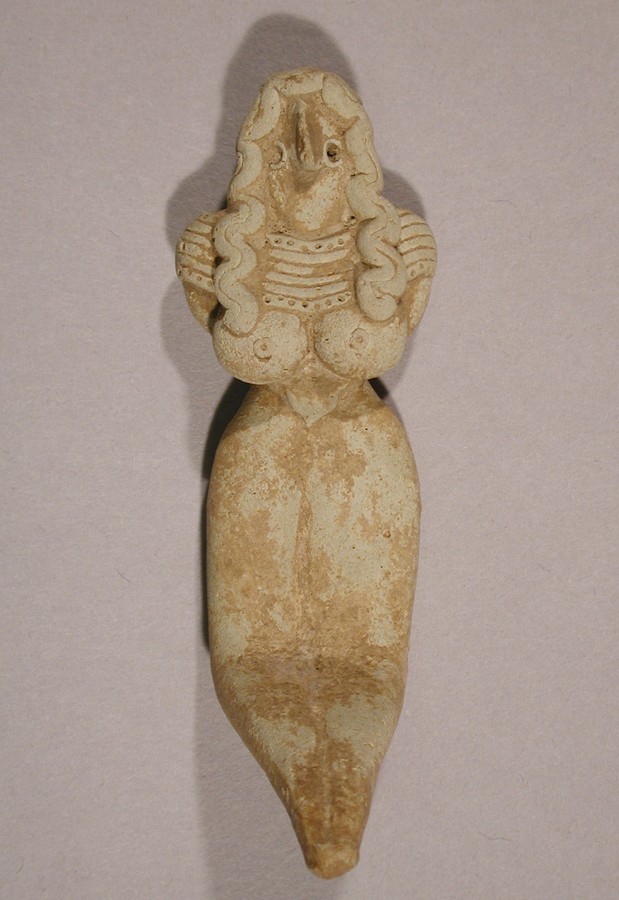
Earlier this month, I stumbled upon an image of a clay female figurine called the “Mother Goddess.” Bedecked with a flagrant headdress and endowed with prominent breasts, the figurine, one of the many recovered from the Neolithic site of Mehrgarh in Balochistan, is a celebration, even deification of the female form. The curvaceous contours of the figurine do not sexualize the female body but lend a cult-like reverence to it. When I look at these figurines, 1000-year old glorifications of the female body preserved in the softness of clay, I cannot help but compare them to modern-day perceptions of the female form in Pakistan and the notions of shame associated with it. How did we go from venerating the female body to demonizing it? So, when Haanya Channa, Founder and President of the recently-launched LUMS Historical Society (LHS), tells me, “History defines our past, forms our present, and draws our future,” I wonder if we, as a society, had not overlooked the exalted history of Mehrgarh women, would we have been kinder to the women of today and tomorrow? I wonder if we had rescued these figurines buried deep into the heart of Balochistan, would we have had to bury so many of our women in recent times? This then, is Haanya’s vision for LHS; to recover and reclaim our history in a way that carves out a better future for all. 

A Word With The Pioneers 

A law major minoring in history, Haanya’s passion for the latter and its multiple realities was stirred by none other than Dr. Ali Raza, the HSS faculty member with the most sought after and frustratingly elusive courses. Fortunately for her, Haanya landed a course with him in her freshman year; a course that would completely alter her understanding and perception of history for years to come. She tells me, “In the first class, he asked us to define ‘colonialism.’ The only definition that I knew was the two-line definition that we had in our textbook, and he told us that he did not believe in the textbook definitions. He said that by the end of the year, our perspective of history and what it is will completely change. And it did.”

Haanya’s colleagues in the Executive Council have had journeys of their own in discovering their passion for history. Heer Cheema, the Head of Publications and a history major, had taken World History in her A-Levels but had never felt drawn to it enough to consider pursuing a degree in it. It wasn’t until she started having conversations with her grandparents about their experiences of the 1947 Partition that her interest in the discipline was truly confirmed. “The more I heard, the more I knew that there were stories I was not hearing, and that just drew me closer and closer to the realization that this is what I wanted to do,” she says. 

For the Head of Research, Mohid Ahsan, who is a senior majoring in history and minoring in CLCS, history has been the exploration not just of the past but also of the self. “I went to a madrassa, some seven or eight years back,” he says, “And after that, I was really confused about the world; coming from an elite school, going to a madrassa with a completely different pedagogy and set of values. History, in some ways, has allowed me to stitch together why I am feeling the way I am feeling.” 

Zarmeen Sajjad, the General Secretary, came to LUMS as a potential political science major, but the history courses she took steered her in the direction of the discipline that resonates with her essentially because of the stories it tells. “History itself has the word ‘story’ in it, so for me, it has always been about the stories of the people, stories from the past that determine the way we view our present,” she says. 

What To Expect: A Comic Series, An Oral History Archive, And Much More! 

One of LHS’ primary goals is to democratize the preservation of history. Instead of restricting the narration, collection, and compilation of historical narratives to an exclusive circle of the educated elite, the Executive Council is committed to ensuring that their publications and archives are accessible to a wider audience. “Our goal is not necessarily to publish research papers which will be read by people like ourselves. We want our work to be able to connect with a broader audience,” says Heer. To achieve this, the society will take on a number of projects, one of which is conducting discussions with Pakistani historians on topics of history that are relevant to the Pakistani narrative. “These conversations will be conducted in Urdu, because that language is at the core of our society, and we already have plenty of historical research available in English which is only read by a small group of scholarly people,” Mohid elaborates.  Hence, LHS is not solely focused on documenting Pakistani history, but also on doing it in a way that makes it accessible to the masses that are usually denied this information on account of linguistic or socio-economic barriers.

Oral history has always been a radical and empowering tool in understanding how past events impacted the lives and experiences of people. In a country where history is largely constructed and rewritten by the state, the oral testimonies of people who were eyewitnesses to and lived through historical occurrences allow us to disentangle the historical truth from state propaganda. But more importantly, it renders history humane. This is why creating an archive of oral history is one of the fundamental objectives of LHS, so much so that Haanya had initially wanted to create an oral history society. “Initially, I had wanted to create a society that would solely focus on oral history, because it is so interesting. It’s not just about the stories people tell, but also the language they use, their expressions, the pauses they take. You can tell so much from just that,” she expresses. LHS understands that oral history has not flourished significantly in Pakistan, and elevating its position and bringing it on the same pedestal as written history is a foremost aim of theirs. “Archiving and making available audio files of oral testimonies is an important part of what we will be doing,” Heer points out. 

Visuals and illustrations have always been the most enchanting ways to tell a story, leading to LHS’ decision to introduce  a comic series that will compel people to visually connect with the past. “The comic series will be published throughout the year, and its point is to capture nuance in an intimate manner, and visual imagery just connects with people, and this is what history is ultimately about; connecting with things around you in ways that you never foresaw,” Heer states. She further informs me that the comic series will be published in a history magazine that the society intends to release. “The magazine will have a variety of pieces in it. Students who have written strong papers in any history course can send their pieces and we will try to publish those because you write these pieces in class and they go nowhere. Now there is a space for them. Along with that, we will also be publishing creative pieces that ask questions like what does it mean to be a researcher? What does it mean to be a historian in a country like Pakistan where so many sources are often kept from you?” she elaborates. 

Stories From The Margins: Unearthing The History Of The Silenced 

The experiences and narratives of religious, ethnic, and gender minorities have almost always been distorted, or worse, erased from the pages of Pakistani history. Very few people know of the Therhi massacre of 1963, during which 118 Shia Muslims were killed by a mob of Deobandi Muslims in Therhi, Sindh. Even fewer are aware of the 1953 Lahore riots which were citywide incidents of arson, looting, and murder against the Ahmaddiya community of Pakistan. In relegating the stories of these minorities to the sidelines, there is a conscious attempt to wipe out their history, and in doing so, to obliterate their identities as well. Therefore, LHS is committed to salvaging these tales of suffering and oppression from the vicious sands of time before it is too late. “Our aim is to get a conversation started on these incidents, and our podcasts, online blogs, and other publications will definitely incorporate historical narratives and vantage points that have been left out in the past. In Pakistan, history has almost always been told from the perspective of the Sunni Punjabi male, but we are committed to retelling history in a way that sidelines no one,” Zaremeen assures. 

Combatting Toxicity And Covert Sexism In A New Society

While student societies are indispensable to the LUMS life, they also sometimes develop a proclivity for nurturing problematic cultures that not only hamper the society’s own growth but also that of the people who devote their time and energy to it. Complaints about society inductions becoming ridiculously selective and instances of covert misogyny have surfaced on LDF repeatedly. Although still navigating through its embryonic stages, LHS is conscious of the ways in which societies can collapse into toxicity and become unfavorable for the people who join them. The EC is committed to forming a community that promises safety and equality. “As students ourselves, we understand the value of learning, and we understand that students enter a society to learn a certain skill set, therefore, we do not expect them to have any sort of rigorous past training or experience. A small example of this is that when we were writing the questions for our application, Mohid stated in brackets that even “prior interest” instead of prior experience in a department is enough,” Heer says. Similarly, the EC is passionate about making the society a safe space for everyone, especially women, who are often discriminated against or treated disrespectfully by male seniors in student societies. “We understand that our responsibility is not just to form a disciplinary committee and come up with a harassment policy; we know that we also have to implement a behavior and culture where women do not feel uncomfortable,” Haanya reassures. 

Spearheaded by a brilliant group of individuals, the LUMS Historical Society promises not just an exploration of the past, but also a re-examination of it. It pledges to take you on a journey that will make you realize that history pervades everything, that reclaiming your past is a way of reclaiming yourself, your roots, and your heritage. With its commitment to diversity, creativity, and nuance, LHS is already asserting its place as one of the most innovative societies that LUMS has to offer. Students cannot wait for its operations to officially start! 

Woes And Hopes: Dreading Enrollment And Salvaging The Damage

Enrollment at LUMS is similar to a Black Friday sale: students are like desperate shoppers frantically trying to bag the best offers of elective and core courses. But just like you never go empty-handed from a Black Friday sale, rest assured, despite the limited number of seats in core courses or surprise Zambeel glitches, you will always end up with courses in your shopping cart. The only problem is that these courses will not always be the ones you wanted. However, worse comes to worst, there are multiple channels you can explore to secure your enrolment in a course that is indispensable to your degree or academic year. Emailing Department Heads or Instructors and explaining that a particular course is integral to your major declaration or academic year bucket usually, if not always, helps. However, enrolment has long cast a nefarious shadow on the lives of LUMS students, and pre, as well as post-enrolment anxiety, has haunted many in their sleep for days. Like the steaming Khokha tea, enrollment woes are a crucial feature of life at LUMS!

Prior to enrolment, students begin planning their course preferences as the course memo is released and later embark on the harrowing process of collecting reviews on instructors/courses, designing weekly class schedules, and ruling out clashing classes. Amidst all this planning and organizing, the sense of impending doom keeps on mounting. Such is the uncertainty of enrolment that students can be found ceaselessly perusing the course memo to hunt for courses that serve as backups for their backups. Core courses often turn out to be the most elusive, forcing students to begrudgingly settle for courses they are disinterested in only for the sake of completing their credit hour requirement. After returning from the enrolment battleground, students, like disillusioned warriors coming from war, take the LUMS Discussion Forum (LDF) by storm. Some furiously complain about the flawed enrollment system. Others post desperate swap requests, offering everything from monetary compensation to the delish Bunker brownies, in a final bid to land a course of their choice.

There are several reasons why the student community at LUMS dreads enrollment:

  1. Limited capacity in core courses:

This is the most frequently raised issue by students who fail to enroll in core courses years before their majors are declared. This delays the mandatory fulfillment of their requirements for core credit hours. The situation doesn’t change even after the allotment of majors; however, students are assured that the university will force enroll them in the end if they constantly fail to get a seat in the core courses. Therefore, while not getting compulsory courses in the freshman or sophomore year is extremely stressful, there is no way that you will not be able to graduate in the major you have declared just because you could not land a seat in a course.

  1. The hoarders:

Students who struggle to get major electives or cores for their minors are often seen protesting against the hoarding issue. Hoarders are the students who enroll in courses from their school only to swap them with students from other schools later to eliminate the risk of unavailability of seats in phase 2. Unfortunately, some of these courses happen to be the major cores for many students, and the relentless hoarding becomes a perpetual source of distress for them. While this may compel students to give up on the dream of completing minors, the university constantly reassures them that towards the end of their degree, they will be force-enrolled in any courses that are crucial to the major or minor they want to graduate with.

  1. Wi-Fi problem:

Although enrollment takes months of planning and analyzing courses, it is a matter of seconds before you can evaluate and control your wins and losses. It is like hitting the jackpot. Many believe it to be a game of luck, but it is also heavily dependent on a good/stable Wi-Fi connection. If your Zambeel lags due to the heavy traffic on the website, or you lose internet for merely a minute, or you don’t blindly validate and press “enroll,” for your selected courses in the shopping cart, the chances are that you won’t be able to score a seat.

Pro-tip: Press enroll strictly at 11:00 a.m. (according to the LMS clock) to avoid a lag, or a reload on Zambeel. Don’t start pressing ‘enroll’ a minute before the due time.

  1. Limited courses on-campus:

The pandemic and the subsequent shift to an online semester have also exacerbated enrollment challenges. During the enrollment for Fall 21, LUMS decided to allow complete access to the campus. Students, mainly from MGHSS, were provided with limited courses on-campus, a few of which consolidated core courses for offered majors and minors. These courses drew student attention and hence birthed a new problem: demand exceeded supply as students longed to re-experience in-person classes.

Embittered and dissatisfied, students have made many suggestions that could help the administration in overcoming problems and ensuring a smooth and successful enrollment.

  1. Increase capacity per course:

This is a unanimously agreed recommendation for core courses. Students can study what they are willing to pay for and not just any other course to fulfill credit hours for the semester. Students also believe that this request should be easy to implement in an online semester since the university won’t bear increased overhead expenses.

  1. Reduce credit hour limit for phase 1:

Students think that the generous limit of enrolling in 16 credit hours during phase 1 encourages students to hoard courses. If the credit hours are reduced to 12, students will be forced to focus on opting for essential classes and won’t be left with a choice to hoard for their friends from a different school or use it later to bribe someone into a swap for a course of their choice.

  1. Pre-enroll students into major core courses:

Struggling to score a seat in major core courses is a genuine problem for many students at LUMS. They fear the unfulfilled core requirements that may put their graduation at stake. Therefore, they recommend pre-enrollment of students (with declared majors) in core courses.

Rightfully so, students at LUMS expect the administration to pay heed to their concerns and take a step to end the continuous loop of disappointments and complaints regarding enrollment.

It is important to keep in mind that while enrolment at LUMS is never a stroll in the park and looms like a specter over your conscience for days, fate and luck do consort in your favour at times and end up enrolling you in some, if not all the courses of your choice. Moreover, LDF becomes a godsend in the aftermath of enrolment. Amidst the winding strings of swap requests on the forum, you will most likely find someone who is willing to take a course off your hands in return for the course of your dreams. Happy Enrolling!