Old Isn’t Gold, It’s Expensive!

Author: Muhammad Rafeh

Abdul Qadir Patel became Pakistan’s youngest member of the Sindh provincial assembly – aged 25 – in 1993. Covering almost two decades of political façade in the country since then, the number of persons under 30 in either the National Assembly or the Provincial Assemblies binds closer to zero.

Benazir Bhutto became the youngest elected Prime Minister of a Muslim state – aged 35 – in 1988. Continuing the legacy, Bilawal Bhutto Zardari became the youngest foreign minister of Pakistan – aged 33 – in the year 2022. While critics grew firm in the opposition to Pakistan’s foreign affairs predicament, having placed little trust in Bhutto’s command over foreign affairs, the benefits of having a younger foreign minister seemed lackluster to the general population.

In a world where countries seem to thrive on young leaders, including Finland under Marin’s leadership, Chile under Boric, and Georgia under Garibashvili, Pakistan has been ill-fated even to have the presence of youth in their assemblies. Imran Khan turned 66 when he presided over his office in 2018; Nawaz Sharif assumed his prime ministerial office, turning 64, whereas Yousaf Raza Gillani took office at the prime age of 56. These are nothing but only the plain records of Pakistan’s democratically elected leaders post-Musharraf.

A critical look into the absence of Pakistan’s youth from legislative assemblies and politics also asks us to consider the youth wings of political parties. In fact, a deeper dive into the mechanics of such existing youth wings ironically highlights these absences. PTI’s youth wing leader in Punjab before the 2018 general elections was Zubair Khan Niazi, who not only did not qualify for youth but also fared through Khan’s bloodline. PMLN’s youth wing performed no different with its current President being Captain (R) Safdar – currently aged 58 and the legal spouse of Maryam Nawaz Khan. The only upside that Pakistan People’s Party hopes to appoint is Asifa Bhutto as the Youth Wing leader of PPP. However, the irony is visible to the naked eye.

Various op-eds have mentioned the need for Pakistan’s youth to vote in the upcoming general election of 2023 – or sooner. The populace of youth between 15 and 30 stands at around 64%. The issues that the nation faces today – in terms of global competition, social security, etc. – fall directly under the youth of Pakistan. A potential voter aged twenty-four could possibly turn into a definitive voter if they were voting for an individual within the same age gap rather than for a Babuji.

While one may present ideas as Khan does, such as pleading the youth to vote and save Pakistan from the irony of heinous invaders unlike himself – a better way to make the youth vote is to ‘make the youth vote for the youth.’ Only if the youth was provided party tickets to PTI than be pleaded to by the former Prime Minister to join their task force in persuading individuals to walk out of their homes and vote for the 2023 general elections.

Sociology consistently points towards the idea that for a person to understand another’s problems, they need to relate to the individual in question. Hence, there seems no way possible other than the way of making the youth vote for the youth in the upcoming elections. While the process may not fare entirely well, even gathering 70% of the 64% population of Pakistan to vote in the national elections of 2023 compared to the 30% who voted in 2018 would be a win for a country whose leaders repeatedly claim for democracy.

Franklin D. Roosevelt famously said, “We may not be able to build the future for our youth, but we may be able to build the youth for the future.” In a country where dynasty politics runs rampant, and the future leadership of PTI is destined to go haywire, it is necessary for the youth to be mobilized into politics and provided party tickets. It may not be time to say goodbye to the old notaries for now, but it will be soon.

“Khel Khel Mein,” LUMS Mein

‘Do you think we’ll get to take a selfie?’

‘I’m pretty sure they’re inside. Let’s try getting in through the side door.’

‘I wonder if she remembers me from 6 years ago.’

‘His last movie was Laal, right? Maybe I can ask a question about that.’

As the author shuffled her way through the crowd of fans pressing against the glass doors, she found the auditorium pulsating with unendurable ecstasy. The LMA had done the improbable: they had invited the matchless Sajal Aly and Bilal Abbas Khan along with the rest of the cast to LUMS for a Meet and Greet prior to the release of their groundbreaking film, Khel Khel Mein. Had we not arrived an hour early, we would’ve never gotten in. After 20 minutes of pushing and prodding from all sides, we managed to find cramped seats in the far left corner.

Within half an hour of settling down, the cast, producer, and director strolled into the dainty little auditorium. Once the excitement had died down a little, our LMA hosts opened up with their introductory spiel highlighting LMA’s projects and vision. Following this, a short introduction to the film Khel Khel Main was made and an enrapturing screening of the trailer was carried out. As Gen Z says these days: the vibes were, no cap, absolutely immaculate.

To satiate their die-hard fans, the entire cast introduced themselves, revealing that for some of them, this was their debut film project. Qudsia (with her fabulous curly hair), Aneesha Altaf, Hasaan min Javaid, Faid (who, by far, was the shyest), and Hammad (who was donning a flawless man-bun) all made a performance.

After this, the director Nabeel Qureshi spoke. He has a history of directing and writing politically controversial films like Actor-In-Law and Na Maloom Afrad, and he shared his keen interest in the historical implications of the 1971 war. He also spoke of his singing endeavors and various awards. Following this, the producer, Fizza Ali Meerza, who worked alongside Nabeel in Na Maloom Afrad, told us about her experience in experimenting with sociopolitical screenwriting.

This was followed by a plethora of anecdotes that the audience listened to in stunned silence. Talking about living together, eating together, and traveling together, the cast established that they had come to know each other very well. The author also discovered that the cast was contractually obliged to eat their meals timely. The novice actors shared what parts of the shooting process they had found rather absurd as well as how the film opened up several avenues of opportunities for them. It came to our attention that during the shoot, Sajal tested positive for Covid-19, and the crew was forced to freeze all venue booking, rentals, and appointments, which proved to be a major obstacle in the filmmaking process.

The cast was filled with nothing but admiration and praise for their director and producer, with Sajal and Bilal mentioning they had never, in their entire careers, seen a director and producer so dedicated to their work; the two were even putting the set together themselves and actively partaking in the smallest of decisions. Fizza, the producer, then highlighted that during casting, she had a true sense of responsibility that came with her authority and in order to choose fairly, the cast was finalized while writing the script.

During the rapid-fire round, we learned some tidbits about the actors’ lives. These include: Hammad would want to wake up as Shahrukh Khan, and Sajal would prefer to be stranded on an island with Mojiz (while Fizza preferred Faid). Sajal also confessed that Mojiz made her the angriest on set as he would always be late. Hammad, however, was unanimously declared the sweetest, although he takes the longest to get ready (hence the perfect man bun). Sajal was known for forgetting her lines most often, but she was forgiven after her hilarious parody of Aneesha. This heartwarming and hilarious episode ended with Bilal being ousted for always sleeping between takes. When asked if they ever felt the urge to abandon the project, they confessed that they wanted to do so “all the time” and that it was impossible to lie to Fizza and Nabeel.

When asked what the set was like, they all agreed it was insane. Their time in Balochistan was especially hectic. Fizza painted a hilariously touching picture of Sajal approaching her in the dead of the night with tear-stained cheeks in a remote guest house of Balochistan, asking to leave for Karachi for 4 hours because her husband, Ahad Raza Mir, was going to South Africa for 3 months. While Fizza did allow her to go, she ensured that Sajal would be back in 4 hours.

The spectacular event ended with the cast holding a mesmerizing dance performance to their hit song, “Nayi Soch” which the audience thoroughly enjoyed. With a few moments to spare, the cast played a short game of never have I ever along with the audience, which we later realized was an excuse to give out promotional gift bags to selected members of the audience.


Eik Qaum Ek Nisaab and the Curious Case of Number 18

Author: Muhammad Rafeh

“Eik Qaum, Eik Nisaab” echoed through the hallways of Pakistan’s education commission as policymakers put their heads together to integrate the Single National Curriculum into the scheme of studies of all schools across the country. The incumbent government thought that a nationwide curriculum change would bring equality, if not equity, to the nation’s educational sector. However, what they did not realize is that a parent does not pay PKR 100,000 a month to Aitchison so that they can receive sub-par education. The issue here is not the implementation of the Single National Curriculum; it is the ridiculous policy that the government has put forth.

From the Children Rights Commissions to the Educational Boards and Legal Analytics, all have been vocal against inequality in the provision of education in Pakistan for several years. Our dearest Prime Minister, Imran Khan, promised a ‘Naya Pakistan’ where education would become one of the most thriving sectors. Three years later, after keeping that promise unfulfilled, the government now wants to implement a risky strategy to change the education sector of the country. There are two problems that need to be addressed. Firstly, through the channel of SNC, the government is trying to address a problem in the education sector that only very few have an issue with, while bigger problems are left unsolved. Secondly, the authority to implement a nationwide curriculum is no longer in the hands of the federal government.

If one has a conversation about the history of Pakistan with our present leaders, it would go something like this:

Reporter: Can you please trace the constitutional history of Pakistan?

The government: Musharraf left in 2008 and then 5 years after that are a bit blank for us. Then, Sharif came into power in 2013.

The government, at this point, is probably unaware that the number 18 even exists; for Sindh, however, the 18th has somewhat become their favorite number. Many have claimed that PTI is the first national party of Pakistan while the others are in the favor of provincial. Those who agree have failed to realize that Pakistan is not just one nation, but it is provincial with provincially delegated subjects. Education, for instance, is one such subject. Where the government had a viable opportunity to open multiple schools across Pakistan, they decided to do something that wasn’t even in their control anymore; this is somewhat of an ‘at least we tried’ attitude. The problem is, just trying is not enough. In a country where the PM takes pride over the fact that the rate of youth leaving Pakistan rises every year, one cannot help but question if the government was trying to improve the educational structure at all in the first place.

Many of my colleagues who are supporters of PTI have often told me that this is just the beginning and that the government is planning “Eik Qaum, Hazaron School”. I cannot help but wonder if our current government is planning to carry this out within the two years left in power, or are they fully confident that they will be running the show until 2028? Even then, the fact that the authorities do not remember the number 18 leaves a big question mark.

Even when the government is planning to implement the SNC, there is a present shortage of the newly printed SNC books in Punjab and Khyber Pakhtunkhwa. In such circumstances, one might also wonder why the educational institutions were closed for a week in these same areas, especially when the implementation of the SNC was in process. Assuming that this is just a conspiracy theory, even if the SNC is implemented in Punjab and KP and not in Sindh (from the looks of it), does that not deepen Pakistan’s problem of inequality in education? Imagine a country where two provinces and the Capital follow one syllabus and the other two provinces follow their own.

Failing to uphold Article-25A of the Constitution of 1973 is set to be a cause of further disparity in a country where inequality is already deep-rooted when it comes to the provision of education. “Ek Qaum, Ek Nisaab” is a catchphrase until the government recalls number 18. When they do, the result would be “Ek Qaum, Hazaron Nisaab” instead of what should have been “Ek Qaum, Hazaron School”.

Pandemic Diaries: The Khoka Rave

Having campus access and the opportunity to create memories to cherish later became a dream of the student body once the pandemic hit. This dream did turn into reality, all thanks to the incredible Student Council that was elected this year. They tediously worked day and night to reach a consensus regarding the campus reopening with the university management. Was it, however, appropriate to take the work of the Student Council for granted? Even if returning to campus instills a semblance of normalcy, the actual reality is far from it. The novel coronavirus is still prevalent, perhaps stronger than ever, and ignoring the seriousness of the problem can significantly harm students’ standing. This is exactly what the recent khoka rave has done.

Following all regulations and receiving approval from the CCA, LUMS Dramaline set up a small stall at the Khoka on September 2nd to give the incoming batch a chance to get to know the society and as a brief orientation. As we are aware, the khoka would be incomplete without some music. And so, speakers were placed along with fairy lights and other beautiful decorations the society could think of. Dramaline’s EC members rigorously followed all SOPs, wore masks, kept sanitizers available, and sought to keep socially distance themselves while jamming with jubilant vibes. You must be thinking: if everything was done according to instructions, what went wrong? Why was the society criticized and blamed for the rave all of a sudden?

From our conversation with one of the EC members, Shafaq Jafri, we came to know how it all went downhill. The society concluded their event responsibly after following all of the appropriate and requires procedures, but they admit that not guarding the speakers carefully was their fault; it gave an opportunity for people to begin a rave. Later on, the members attempted to disperse the crowd, but people were “far from listening to anyone”, as reported by one of the OB members of Dramaline.

Not long after, the rave went viral, drawing a lot of criticism from the student body and targeting of students who behaved in such a wildly irresponsible manner. Under normal circumstances, the music of Abrar-ul-“Nach Haq’s Punjabi” pushes just about anyone to show off their killer moves, but it was insanity to allow yourself to be moved by it in the midst of a pandemic. Gathering around where a stall was set previously without masks, not listening to anyone, and dancing your heart out could cause several students to be expelled from LUMS once the management takes notice. Nothing of the sort has happened yet, but students should pay heed to following SOPs. We realize that everyone wants things to return back to normal, but violating SOPs will not help you get there. We’re all adults now, and we can’t tell each other how to act; now, what’s done is done. It is important that in this case, history should not be repeated for the sake of our fellow Luminites.


Longing For The Past And Learning From It: A Conversation With The Pioneers Of LUMS Historical Society

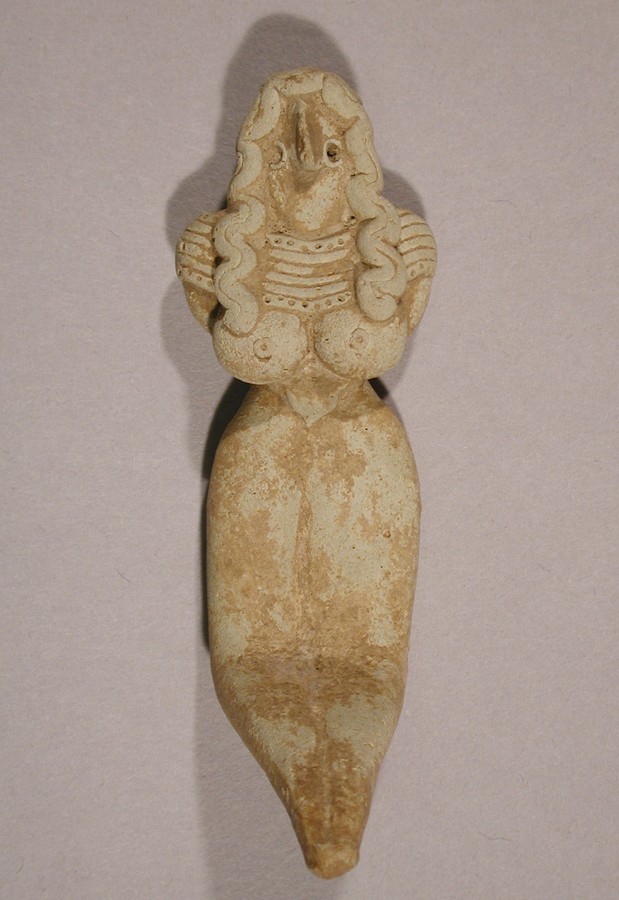
Earlier this month, I stumbled upon an image of a clay female figurine called the “Mother Goddess.” Bedecked with a flagrant headdress and endowed with prominent breasts, the figurine, one of the many recovered from the Neolithic site of Mehrgarh in Balochistan, is a celebration, even deification of the female form. The curvaceous contours of the figurine do not sexualize the female body but lend a cult-like reverence to it. When I look at these figurines, 1000-year old glorifications of the female body preserved in the softness of clay, I cannot help but compare them to modern-day perceptions of the female form in Pakistan and the notions of shame associated with it. How did we go from venerating the female body to demonizing it? So, when Haanya Channa, Founder and President of the recently-launched LUMS Historical Society (LHS), tells me, “History defines our past, forms our present, and draws our future,” I wonder if we, as a society, had not overlooked the exalted history of Mehrgarh women, would we have been kinder to the women of today and tomorrow? I wonder if we had rescued these figurines buried deep into the heart of Balochistan, would we have had to bury so many of our women in recent times? This then, is Haanya’s vision for LHS; to recover and reclaim our history in a way that carves out a better future for all. 

A Word With The Pioneers 

A law major minoring in history, Haanya’s passion for the latter and its multiple realities was stirred by none other than Dr. Ali Raza, the HSS faculty member with the most sought after and frustratingly elusive courses. Fortunately for her, Haanya landed a course with him in her freshman year; a course that would completely alter her understanding and perception of history for years to come. She tells me, “In the first class, he asked us to define ‘colonialism.’ The only definition that I knew was the two-line definition that we had in our textbook, and he told us that he did not believe in the textbook definitions. He said that by the end of the year, our perspective of history and what it is will completely change. And it did.”

Haanya’s colleagues in the Executive Council have had journeys of their own in discovering their passion for history. Heer Cheema, the Head of Publications and a history major, had taken World History in her A-Levels but had never felt drawn to it enough to consider pursuing a degree in it. It wasn’t until she started having conversations with her grandparents about their experiences of the 1947 Partition that her interest in the discipline was truly confirmed. “The more I heard, the more I knew that there were stories I was not hearing, and that just drew me closer and closer to the realization that this is what I wanted to do,” she says. 

For the Head of Research, Mohid Ahsan, who is a senior majoring in history and minoring in CLCS, history has been the exploration not just of the past but also of the self. “I went to a madrassa, some seven or eight years back,” he says, “And after that, I was really confused about the world; coming from an elite school, going to a madrassa with a completely different pedagogy and set of values. History, in some ways, has allowed me to stitch together why I am feeling the way I am feeling.” 

Zarmeen Sajjad, the General Secretary, came to LUMS as a potential political science major, but the history courses she took steered her in the direction of the discipline that resonates with her essentially because of the stories it tells. “History itself has the word ‘story’ in it, so for me, it has always been about the stories of the people, stories from the past that determine the way we view our present,” she says. 

What To Expect: A Comic Series, An Oral History Archive, And Much More! 

One of LHS’ primary goals is to democratize the preservation of history. Instead of restricting the narration, collection, and compilation of historical narratives to an exclusive circle of the educated elite, the Executive Council is committed to ensuring that their publications and archives are accessible to a wider audience. “Our goal is not necessarily to publish research papers which will be read by people like ourselves. We want our work to be able to connect with a broader audience,” says Heer. To achieve this, the society will take on a number of projects, one of which is conducting discussions with Pakistani historians on topics of history that are relevant to the Pakistani narrative. “These conversations will be conducted in Urdu, because that language is at the core of our society, and we already have plenty of historical research available in English which is only read by a small group of scholarly people,” Mohid elaborates.  Hence, LHS is not solely focused on documenting Pakistani history, but also on doing it in a way that makes it accessible to the masses that are usually denied this information on account of linguistic or socio-economic barriers.

Oral history has always been a radical and empowering tool in understanding how past events impacted the lives and experiences of people. In a country where history is largely constructed and rewritten by the state, the oral testimonies of people who were eyewitnesses to and lived through historical occurrences allow us to disentangle the historical truth from state propaganda. But more importantly, it renders history humane. This is why creating an archive of oral history is one of the fundamental objectives of LHS, so much so that Haanya had initially wanted to create an oral history society. “Initially, I had wanted to create a society that would solely focus on oral history, because it is so interesting. It’s not just about the stories people tell, but also the language they use, their expressions, the pauses they take. You can tell so much from just that,” she expresses. LHS understands that oral history has not flourished significantly in Pakistan, and elevating its position and bringing it on the same pedestal as written history is a foremost aim of theirs. “Archiving and making available audio files of oral testimonies is an important part of what we will be doing,” Heer points out. 

Visuals and illustrations have always been the most enchanting ways to tell a story, leading to LHS’ decision to introduce  a comic series that will compel people to visually connect with the past. “The comic series will be published throughout the year, and its point is to capture nuance in an intimate manner, and visual imagery just connects with people, and this is what history is ultimately about; connecting with things around you in ways that you never foresaw,” Heer states. She further informs me that the comic series will be published in a history magazine that the society intends to release. “The magazine will have a variety of pieces in it. Students who have written strong papers in any history course can send their pieces and we will try to publish those because you write these pieces in class and they go nowhere. Now there is a space for them. Along with that, we will also be publishing creative pieces that ask questions like what does it mean to be a researcher? What does it mean to be a historian in a country like Pakistan where so many sources are often kept from you?” she elaborates. 

Stories From The Margins: Unearthing The History Of The Silenced 

The experiences and narratives of religious, ethnic, and gender minorities have almost always been distorted, or worse, erased from the pages of Pakistani history. Very few people know of the Therhi massacre of 1963, during which 118 Shia Muslims were killed by a mob of Deobandi Muslims in Therhi, Sindh. Even fewer are aware of the 1953 Lahore riots which were citywide incidents of arson, looting, and murder against the Ahmaddiya community of Pakistan. In relegating the stories of these minorities to the sidelines, there is a conscious attempt to wipe out their history, and in doing so, to obliterate their identities as well. Therefore, LHS is committed to salvaging these tales of suffering and oppression from the vicious sands of time before it is too late. “Our aim is to get a conversation started on these incidents, and our podcasts, online blogs, and other publications will definitely incorporate historical narratives and vantage points that have been left out in the past. In Pakistan, history has almost always been told from the perspective of the Sunni Punjabi male, but we are committed to retelling history in a way that sidelines no one,” Zaremeen assures. 

Combatting Toxicity And Covert Sexism In A New Society

While student societies are indispensable to the LUMS life, they also sometimes develop a proclivity for nurturing problematic cultures that not only hamper the society’s own growth but also that of the people who devote their time and energy to it. Complaints about society inductions becoming ridiculously selective and instances of covert misogyny have surfaced on LDF repeatedly. Although still navigating through its embryonic stages, LHS is conscious of the ways in which societies can collapse into toxicity and become unfavorable for the people who join them. The EC is committed to forming a community that promises safety and equality. “As students ourselves, we understand the value of learning, and we understand that students enter a society to learn a certain skill set, therefore, we do not expect them to have any sort of rigorous past training or experience. A small example of this is that when we were writing the questions for our application, Mohid stated in brackets that even “prior interest” instead of prior experience in a department is enough,” Heer says. Similarly, the EC is passionate about making the society a safe space for everyone, especially women, who are often discriminated against or treated disrespectfully by male seniors in student societies. “We understand that our responsibility is not just to form a disciplinary committee and come up with a harassment policy; we know that we also have to implement a behavior and culture where women do not feel uncomfortable,” Haanya reassures. 

Spearheaded by a brilliant group of individuals, the LUMS Historical Society promises not just an exploration of the past, but also a re-examination of it. It pledges to take you on a journey that will make you realize that history pervades everything, that reclaiming your past is a way of reclaiming yourself, your roots, and your heritage. With its commitment to diversity, creativity, and nuance, LHS is already asserting its place as one of the most innovative societies that LUMS has to offer. Students cannot wait for its operations to officially start! 

Woes And Hopes: Dreading Enrollment And Salvaging The Damage

Enrollment at LUMS is similar to a Black Friday sale: students are like desperate shoppers frantically trying to bag the best offers of elective and core courses. But just like you never go empty-handed from a Black Friday sale, rest assured, despite the limited number of seats in core courses or surprise Zambeel glitches, you will always end up with courses in your shopping cart. The only problem is that these courses will not always be the ones you wanted. However, worse comes to worst, there are multiple channels you can explore to secure your enrolment in a course that is indispensable to your degree or academic year. Emailing Department Heads or Instructors and explaining that a particular course is integral to your major declaration or academic year bucket usually, if not always, helps. However, enrolment has long cast a nefarious shadow on the lives of LUMS students, and pre, as well as post-enrolment anxiety, has haunted many in their sleep for days. Like the steaming Khokha tea, enrollment woes are a crucial feature of life at LUMS!

Prior to enrolment, students begin planning their course preferences as the course memo is released and later embark on the harrowing process of collecting reviews on instructors/courses, designing weekly class schedules, and ruling out clashing classes. Amidst all this planning and organizing, the sense of impending doom keeps on mounting. Such is the uncertainty of enrolment that students can be found ceaselessly perusing the course memo to hunt for courses that serve as backups for their backups. Core courses often turn out to be the most elusive, forcing students to begrudgingly settle for courses they are disinterested in only for the sake of completing their credit hour requirement. After returning from the enrolment battleground, students, like disillusioned warriors coming from war, take the LUMS Discussion Forum (LDF) by storm. Some furiously complain about the flawed enrollment system. Others post desperate swap requests, offering everything from monetary compensation to the delish Bunker brownies, in a final bid to land a course of their choice.

There are several reasons why the student community at LUMS dreads enrollment:

  1. Limited capacity in core courses:

This is the most frequently raised issue by students who fail to enroll in core courses years before their majors are declared. This delays the mandatory fulfillment of their requirements for core credit hours. The situation doesn’t change even after the allotment of majors; however, students are assured that the university will force enroll them in the end if they constantly fail to get a seat in the core courses. Therefore, while not getting compulsory courses in the freshman or sophomore year is extremely stressful, there is no way that you will not be able to graduate in the major you have declared just because you could not land a seat in a course.

  1. The hoarders:

Students who struggle to get major electives or cores for their minors are often seen protesting against the hoarding issue. Hoarders are the students who enroll in courses from their school only to swap them with students from other schools later to eliminate the risk of unavailability of seats in phase 2. Unfortunately, some of these courses happen to be the major cores for many students, and the relentless hoarding becomes a perpetual source of distress for them. While this may compel students to give up on the dream of completing minors, the university constantly reassures them that towards the end of their degree, they will be force-enrolled in any courses that are crucial to the major or minor they want to graduate with.

  1. Wi-Fi problem:

Although enrollment takes months of planning and analyzing courses, it is a matter of seconds before you can evaluate and control your wins and losses. It is like hitting the jackpot. Many believe it to be a game of luck, but it is also heavily dependent on a good/stable Wi-Fi connection. If your Zambeel lags due to the heavy traffic on the website, or you lose internet for merely a minute, or you don’t blindly validate and press “enroll,” for your selected courses in the shopping cart, the chances are that you won’t be able to score a seat.

Pro-tip: Press enroll strictly at 11:00 a.m. (according to the LMS clock) to avoid a lag, or a reload on Zambeel. Don’t start pressing ‘enroll’ a minute before the due time.

  1. Limited courses on-campus:

The pandemic and the subsequent shift to an online semester have also exacerbated enrollment challenges. During the enrollment for Fall 21, LUMS decided to allow complete access to the campus. Students, mainly from MGHSS, were provided with limited courses on-campus, a few of which consolidated core courses for offered majors and minors. These courses drew student attention and hence birthed a new problem: demand exceeded supply as students longed to re-experience in-person classes.

Embittered and dissatisfied, students have made many suggestions that could help the administration in overcoming problems and ensuring a smooth and successful enrollment.

  1. Increase capacity per course:

This is a unanimously agreed recommendation for core courses. Students can study what they are willing to pay for and not just any other course to fulfill credit hours for the semester. Students also believe that this request should be easy to implement in an online semester since the university won’t bear increased overhead expenses.

  1. Reduce credit hour limit for phase 1:

Students think that the generous limit of enrolling in 16 credit hours during phase 1 encourages students to hoard courses. If the credit hours are reduced to 12, students will be forced to focus on opting for essential classes and won’t be left with a choice to hoard for their friends from a different school or use it later to bribe someone into a swap for a course of their choice.

  1. Pre-enroll students into major core courses:

Struggling to score a seat in major core courses is a genuine problem for many students at LUMS. They fear the unfulfilled core requirements that may put their graduation at stake. Therefore, they recommend pre-enrollment of students (with declared majors) in core courses.

Rightfully so, students at LUMS expect the administration to pay heed to their concerns and take a step to end the continuous loop of disappointments and complaints regarding enrollment.

It is important to keep in mind that while enrolment at LUMS is never a stroll in the park and looms like a specter over your conscience for days, fate and luck do consort in your favour at times and end up enrolling you in some, if not all the courses of your choice. Moreover, LDF becomes a godsend in the aftermath of enrolment. Amidst the winding strings of swap requests on the forum, you will most likely find someone who is willing to take a course off your hands in return for the course of your dreams. Happy Enrolling!

‘Afghan Crisis: What’s Really Happening’ In a Panel Talk with Hum-Aahang


Hum-Ahang, a student-led society, has dedicated considerable efforts towards working and raising awareness, as well as promoting tolerance and diversity through panel talks and discussion forums on a variety of topics. These range from theoretical philosophical discourse to major socio-political developments around the globe. On August 22, 2021, Hum-Ahang hosted an imperative talk regarding the ongoing Afghanistan crisis that has unfolded after the takeover of the Taliban over most of the country’s districts. Whilst world media has covered Afghanistan extensively, be it the gut-wrenching pictures of Kabul Airport or the supposed ‘PR’ of the Taliban, the indigenous narrative has, in the process, been tragically sidelined.

Hum-Ahang invited four students studying in Pakistan, including a second-generation refugee from the Soviet-Afghan invasion and a Hazara community representative from the Pashtun belt. During the first half, the panelists made significant insightful comments. They first engaged in a general discussion on the history of the region. The panelists analyzed the controversy of the Durand Line, and how the lack of resources for Afghan refugees in Pakistan has led to a general criticism of Pakistan’s policies. This had led to a certain level of reluctance to embrace Pakistan as a true ally of the Afghan national government. They also explained, at length, how people in Afghanistan perceive the recent turn of events; the general public is not in favour of the Taliban taking over.

The crucial question of women’s rights was also raised, especially since under the new regime it is believed that women are being severely oppressed. To this, one of the female panelists expressed that the Western media is being biased; it has portrayed the Taliban as barbaric oppressors of women. She emphasized that there is a selective restriction on female mobility as hijab has been made mandatory. This information proved to be useful in debunking myths about the position of Afghan women under Taliban rule.

Additionally, the panelists shed some light on the imperialistic tendencies of the US, constantly weakening Afghanistan. They also discussed how the Taliban have ‘created a positive image’ for themselves this time as compared to the 90s.

The first half of the talk concluded with an exchange of hopeful, optimistic words, and with the promise that there will be more such informative exchanges between Pakistan and Afghanistan’s youth.

The second half of the talk moved towards a more conventional discussion between academics that have researched and significantly worked on topics like international security and Pak-Afghan relations. They conversed about the role of the United States in providing a contradictory policy with regards to the Taliban, shifting between outward hostility and the negotiation table. The academics engaged with many key areas of research that often get ignored in the Afghan discourse, including the Western portrayal of the Afghan woman and the role of the NATO forces in the region impacting Taliban mobilization and strategizing. The illustrious discussion was concluded by a short question and answer session where the attentive audience pitched in and put forth their queries regarding the topic going through most people’s minds these days i.e Afghanistan’s future.

Overall, the talk was highly enriching and provided a fresh perspective on a topic that continues to shape the future of this region in radical ways. We hope to witness similar initiatives being taken in the near future to evoke further awareness in the youth on topics of socio-political significance.

A Return To The Dark Ages: Women Under Taliban Control In Afghanistan

Author: Javaria Ahmad

After a 20-year long occupation, the United States decided to fully withdraw its troops from the country, allowing the Taliban to refill the power vacuum. In the past two weeks alone, the Taliban have reassumed control of two-thirds of the country, including the major cities of Herat, Faryab, and Lashkar Gah. Following President Ashraf Ghani’s sudden departure, the city of Kabul swiveled right into the hands of the Taliban, who now enjoy unhindered access to the Presidential Palace. While the US is rushing to safely evacuate American officials and diplomats from Taliban-controlled Kabul, local citizens have no choice but to precariously cling to overcrowded airplanes in a desperate bid to flee the country, only to fall to their deaths. The USA’s war in Afghanistan has ended in the same way it had started 20 years ago: with the Taliban in control.

While in power 20 years ago, the Taliban enforced stringent laws that prohibited women from working outside, seeking education after the age of eight, and being seen in public unveiled and without a male guardian. Moreover, young girls were forced into marriages to encourage chastity, not allowed to appear on television or radio, and often deprived of adequate medical services because the Taliban deemed it inappropriate for women to be treated by na-mehram male doctors. Defying these laws entailed swift and harsh punishments which, for the sadistic pleasure of the Taliban or to teach a cautionary lesson, were meted out publicly, before a crowd of petrified spectators. While much has changed in the last twenty years, the Taliban most certainly have not, and the recent takeover threatens to once again relegate the women to the sidelines.

As an extremist and militant Islamist group, the Taliban harbor primitively misogynistic views on women and their involvement in the public sphere. In just a few days of their return to power, they have started whitewashing the pictures of female models outside beauty parlors and jewelry shops. The erasure of the visuals of the female form from the public domain is symbolic of the physical erasure of women from the social sphere that the Taliban takeover foreshadows. According to reports, teachers have started to bid farewell to their female students in schools and universities as education for women is being forbidden in many areas. Working women are being expelled from workplaces to be replaced by their male relatives. Furthermore, the mandatory observance of purdah also reneges on a right that Afghan women have earned after years of struggle: the right to choose for themselves and their bodies. Forced marriages are also expunging on the women’s right to decide for themselves as unmarried girls between the ages of 15 and 45 are being coerced into matrimonial arrangements with Taliban soldiers, confining them to a life of servitude, submission, and marital rape. Numerous Afghan women are losing sleep over the horrors that await them under the new regime; horrors that some of them have already countenanced once, years ago.

“I did not expect that we would be deprived of all our basic rights again and travel back to 20 years ago. That after 20 years of fighting for our rights and freedom, we should be hunting for burqas and hiding our identity.”

“Women in Afghanistan are the most at -danger or most at-risk population of the country… those who [have been] upset with women becoming powerful in the last 20 years.”

“I stay up late at night, sometimes till one or two in the morning, worrying about what will happen. I am afraid that because I am rejecting the burqa, soon I will have to stay at home, and I will lose my independence and freedom.”

These statements taken from The Guardian and NBC News reflect the fear and apprehensions that have been paralyzing Afghan women since the USA abandoned the country. Although the Taliban have assured that their assumption of power will be peaceful, people who are aware of the Taliban’s previous history in Afghanistan are desperate to flee the country in fear of their retribution. Many women have gone into hiding, lamenting the fate that awaits them now. From concealing diplomas, certificates, and books in their houses to buying burqas, Afghan women and girls now prepare for a life that they had worked so hard to shirk off.

In these difficult times, it is important to speak up on the matter. In order to help, you can donate to @AfghanAidHQ emergency relief fund or @rescueorg.

Uncovering the Past: The Discovery of Unmarked Graves in Canada and the Plight of Indigenous Communities

Author: Javaria Ahmad

After news broke out about the discovery of 215 unmarked graves of children at the Kamloops Indian Residential School in British Columbia, the Cowessess First Nation decided to use the same ground-penetrating radar to scan more areas. Towards the end of June, they announced the additional discovery of 751 unmarked graves on the premises of the former Marieval Indian Residential School in Saskatchewan province. Last month, 160 more such graves were found on Penelakut Island, now referred to as Kupur Island. Notably, these graves mostly belonged to indigenous children.

From the 1800s to the mid-1900s, indigenous children were enrolled in these residential boarding schools of Canada. They were mostly taken away from their families without consent and were forced to live with the fact that the school was trying to instill “superior” Euro-American values and culture within them. In these Catholic, church-run boarding schools, young students were subject to abuse and extreme neglect; from not being allowed to speak their own languages to being targets of rampant physical, sexual and emotional violence. According to the accounts of survivors, many students died because of alienation and torture for being considered “heathens”, with many girls being impregnated by priests and students being subject to severe punishments for minor mistakes. Several students vanished as well, for which the possible explanation is that they died and their graves are now being discovered. Numerous children also died during their efforts to escape, while others committed suicide.

This mass discovery of unmarked graves in Canada is not an isolated event, it is a part of continuing systematic discrimination, prejudice, injustice, and racism against indigenous communities across the globe. Their values and culture have systematically been sidelined and many communities are pushed to the peripheries to inculcate Euro-American traditions and culture.

There is no denying that this was a crime against humanity. Although Canada has pledged millions of dollars for the search for remaining burial sites and is supporting the survivors and pressurizing the Catholic churches to compensate the victims of the residential schools, the truth remains that the pain children had to face while being taken to boarding schools against their will cannot be compensated. While the First Nations are still systematically silenced and sidelined, they have managed to survive and embrace their culture. They continue to thrive in many aspects, despite their past struggles. A daughter of a survivor said: “The whole residential school system was meant to destroy an entire people, but now I’m seeing young Indigenous becoming doctors, lawyers, and scientists. They’re becoming leaders. The fact that we can do these things and still know who we are and where we came from means the residential school system failed”.

Tales from the Town Hall: Q&A with Dr. Adnan Zahid

Authors: Aiman Rahman, Areej Akhtar, Maha Uzair

As soon as the clock struck four today, LUMS students frantically began rummaging back and forth through emails to find the Zoom link for the Town Hall with the Dean of OSA. With the atmosphere reeking of premonition, tensions seemed to be running high as Dr. Adnan Zahid occupied center stage and was barraged with a tsunami of student questions. Some prominent concerns were brought to light such as hostel accommodation, campus facilities, and measures to combat Covid-19.

Traversing Through the Toils of Triple Occupancy: When a residence survey circulated by the Student Council revealed that accommodation options boiled down to either triple occupancy rooms with no tables and chairs to study or off-campus accommodation at Askari apartments with stringent curfews, many students felt as if they had to choose between the devil and the deep blue sea. Despite being agitated about the inconvenience of inhabiting triple occupancy rooms, students were more inclined towards LUMS hostels. Out of 1100 respondents, 70% opted for triple accommodation as opposed to 30% opting for Askari, allowing the Student Council and the administration to finalize the decision based on the results. During the Town Hall, Dr. Zahid further clarified that not only has the batch size increased this year, but the increase from last year has also aggravated the situation, when the campus was not fully functional and the entire student body could not be absorbed on campus premises. “There’s a two-year increase in the student body now,” he commented. Furthermore, he stressed that while triple occupancy may not be the ideal solution, it is one of the only two that are available right now, “Having double occupancy on campus across the board is a solution we do not have. Having triple occupancy or moving students out of the campus were the only solutions we had. It’s like being stuck between a rock and a hard place.” When asked about the health hazard posed by triple occupancy rooms since they would result in the violation of SOPs, Dr. Zahid stated, “On-campus engagement is happening because we are vaccinated. You cannot argue that triple occupancy alone is a health risk.” He further clarified that a system of random rigorous testing in hostels will be implemented to keep the virus infection at bay.

In regards to triple occupancy, an important concern raised by the student body was the rent of the hostel rooms. Many felt that they should not have to pay a staggering amount above PKR 30,000 for rooms meant for two people being inhabited by three instead. In response, Dr. Zahid stated that the rent of the hostel rooms was set by the finance department, and it was determined after multiplying the rent of double occupancy rooms by two, and dividing it by three. It was also communicated that accommodation applications will go live on Wednesday and there is a possibility that students will be allowed to mention their roommate preferences.

Salient Sorrows about Study Spaces: While double occupancy rooms provide adequate space for studying and taking classes inside the room, triple occupancy rooms certainly do not. With no desks or chairs for studying and working, students allotted triple occupancy rooms will not be able to take classes, writing assignments, or prepare for quizzes and exams conveniently inside their rooms. When this concern was raised, Dr. Zahid responded that within each hostel, two to three rooms will be converted into “study rooms” with sufficient furniture that students can utilize for studying. Moreover, he also assured students that other areas of campus were being converted into communal working spaces with chairs and desks to ensure that students can study undisturbed in a peaceful environment.

Spring Prophecies: Will the Next Semester Bode Well for Students?

As things already look hazy for Fall’ 21, students found themselves posing the ultimate question, “Would Spring’ 22 bode well for the students or would it only usher in another semester of fall blues?”. Dr. Zahid declared that the construction of a new building is underway and that students will no longer have to be crammed up in triple occupancy since upon completion of the said hostel building, LUMS will revert back to double occupancy. This appears to be a promising possibility for the students honeycombed into limited spaces this semester.

Money Woes: Fees, Inflation, and TAship Salaries

An interesting thing that LUMS students have noticed is how the university attributes yearly increases in fees to inflation. When Dr. Zahid was asked about why TAship salaries are never increased for the same reason, he replied that he will look into it. Hopefully, this point will be taken into consideration and TAs will be paid more, which is just what they deserve.

Additionally, another important point raised in the Town Hall was the matter of fees in an online system, “How is it that we are paying hundreds of thousands of rupees, which are increasing each year, to just essentially sit behind a screen and attend Zoom calls?”  Dr. Zahid emphasized that while it is true that in virtual classes students are not availing any campus facilities, the academic quality of the courses has not changed, and therefore the classes being offline or online should not affect the amount students are paying. He also quoted his own experience, saying that in the classes he had taught online, he had felt that the students had learned just as much as they had learned from him on-campus.

The Silent Bell of the Curfew

Among other things, changes in curfew timings have brought a halt to the exciting buzz of campus life since the beginning of the pandemic. The last communicated curfew timings were from 8 AM to 10 PM, and no student is allowed to leave or enter the premises outside this timeframe. When the Dean of OSA was asked about where the administration stands on removing the curfew, he responded by saying that they plan to impose a generous curfew, something like ‘till midnight’. He added that possibly in a month or so, they might reevaluate these timings and relax them further, reasoning that the curfew is in place just to exercise caution.

The Constant Crusade for Campus Facilities

When asked about the degree to which campus facilities will be accessible, it was established that all facilities will see a “phased” opening, not a full-fledged one. Therefore, complete access will not be offered to the student body. It was clarified that students should instead anticipate a phased reopening of these facilities so that a return to normalcy can be ensured for all in the next few months.

Quarantine Quabble

When asked about the quarantine guidelines that will be implementable in Fall, it was revealed that students will be allowed to visit their homes for a few days each month, and upon returning they might have to submit a negative PCR test in order to not be quarantined. If this policy is implemented, the expenses will be borne by the students themselves. This raises a question: do the same rules apply to instructors? The short answer is no.

Dr. Zahid proclaimed that the same quarantine rules cannot be applied to faculty members since “we are not responsible for them, we are responsible for the students.” Interestingly, faculty members are allowed to leave the campus as they wish, with no PCR tests required from them or and strict quarantine rules and regulations.

Shifting Online Classes Offline: A Tale as Old as Time

Several students expressed a sense of being wronged as a couple of their courses were converted from physical classes to remote ones. The decrease from the promised 60% to 51% in-person classes came across as an unpleasant surprise to the students who were already packing their suitcases and planning an on-campus semester. Dr. Zahid reasoned that this was because a lot of instructors have old parents and are petrified by the possibility of being carriers of the Delta Variant, and this has led to them reevaluating their decision about holding physical classes. He claimed that exercising caution fell under the domain of an instructor’s rights, especially since such a vicious variant of Covid-19 has cropped up.